

Blog
CARDAMOM

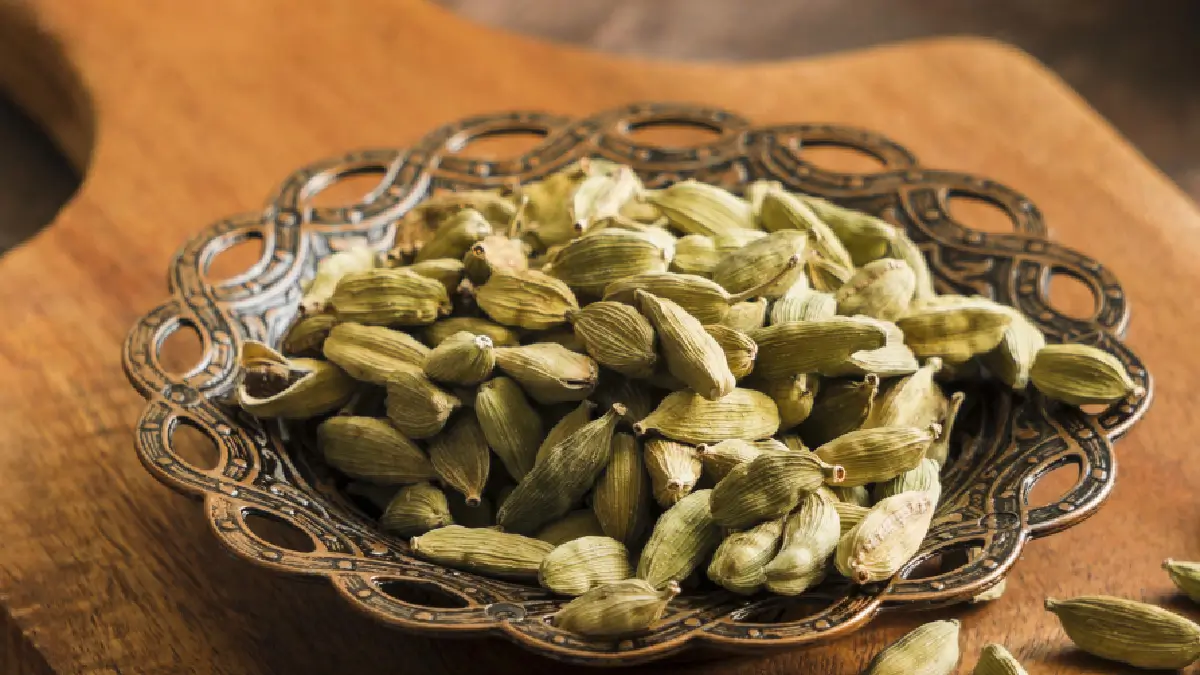
FDA also administers, Surveillance programmes to monitor for pesticide residues as per the limits prescribed by the US Environmental Protection Agency (EPA). Most EU countries import spices in accordance with prevailing food laws of the EU. The Netherlands have specifications for various quality parameters of spices. Germany has prescribed tolerance levels for pesticides residues. The German specifications are supposed to be the most stringent. The Dutch law also prescribes maximum residues for pesticides in spices. The food industry and spice processers in U.K. follow the limit for pesticides prescribed in the German specifications.
Most EU countries have prescribed tolerance levels for Aflatoxin. The general specification for European countries for Aflatoxin B I and Total Aflatoxin (B I + B2 + G I + G2) are 5 ppb and 10 ppb respectively.
In all EU countries, specifications for Salmonella in spices is absence in 25 gms. The food processing industry and spice grinders specify microbial load for each spice blend depending upon the end use.
Pre-Harvest, Harvest and Post-Harvest Operations
The quality of any commodity depends upon the inputs used and the practices adopted in its cultivation, processing, packing, storing and transportation. In the case of agriculture products, therefore, constant care right from the pre-harvest operation till the product reaches the consumers becomes imperative. The following are the important points to be remembered at the various stages.
Pre-Harvest
- Use planting materials of only high yielding varieties with desirable capsules characteristics dark green colour and uniform bold size such as Njallani, ICRI-I, ICRI-2, ICRI-3, CCS-I, Pv-I, Mudigere PI, NGG etc.
- Control of thrips and other pests may be carried out with minimum use of recommended insecticides. As far as possible use bio-pesticides. Pesticides banned in the importing countries should never be used.
- For obtaining good green colour to the capsules, shade regulation has to be carried out properly and in time. If there is thick shade due to dense branches and bigger leaves, chopping of branches should be done to provide filtered light of 40 to 60% of the open area.
Soil application of potasium (180 g/plant) or megnesium sulphate (lOg/plant) during June increases green colour of capsules.
Harvest
- Harvest only capsules which are just short of full ripeness (touch and drop stage) to get maximum green colour during drying. Harvest at this stage gives marginal increase in litre weight of capsule and crop increase by about 13%. It also helps in preventing splitting of capsules during the process of curing and for damages by birds and squarrels in the field. Harvesting of immatured and over matured capsules should be avoided. The insecticide spray may be adjusted in such a way as to spray after the harvest or atleast 20 days before harvest.
- Use baskets with proper aeration for harvest. preferably bamboo/cane baskets. Do not use pesticide/fertilizers bags for collection of green capsules after harvest.
- Ripening of capsules in creeping panicles (Malabar) is faster requiring closer picking intervals.
Post – Harvest
- Remove extraneous matters from the capsules and wash thoroughly with clean water the harvested produce before drying.
- Soaking of freshly harvested green cardamom capsules in 2 percent washing soda solution for 10 minutes before drying helps in retaining better green colour.
- Adopting scientific methods of curing to retain the original green colour. Rapid drying (When moisture removal rates exceeded 5 to 6% per hour on wet weight basis) positively reduced the degree of colour retention and increased the percentage of split and yellow capsules. Rate of moisture removal exceeding 6 to 7% hour during the second and third phase of curing (3 to 9 hrs) was found to reduce the green colour retention. The rate of moisture loss was observed to be almost static around 10% over a wide range of temperature (15-60°) and air flow rates (1.83 – 3.5 m-I) studied. Maximum retention of green colour was observed at curing temperature of 45°c all through the curing process. Increasing the temperature to 500°c during the last phase of curing did not affect the colour retention to any appreciable degree; however, it helped to reduce the curing time by a couple of hours. Higher temperature during the early phase of curing (0 to 6 hrs.) distinctly affected the green colour of capsules. A strong interaction between air flow retention was observed. The results indicated that for a given curing temperature the air flow rate should be optimum; higher and lower air flow rates affected the colour retention and duration of curing, respectively. A relative humidity varying for cardamom curing during the initial and later stages of curing. A strong interaction between moisture pick up and loss of green colour was observed . At room temperatures, a RH of 55, to 65% was found to be the optimum for safe storage of cured cardamom capsules.
- Polishing of capsules give shining to the produce Grade according to size and colour.
- Store in moist proof containers. Jute bag with 100 gauge LOPE lining is observed to be the most cost effective packaging material for cardamom.
- The dried produce may be preferably sold soon after drying provided the growers get remunerative price.